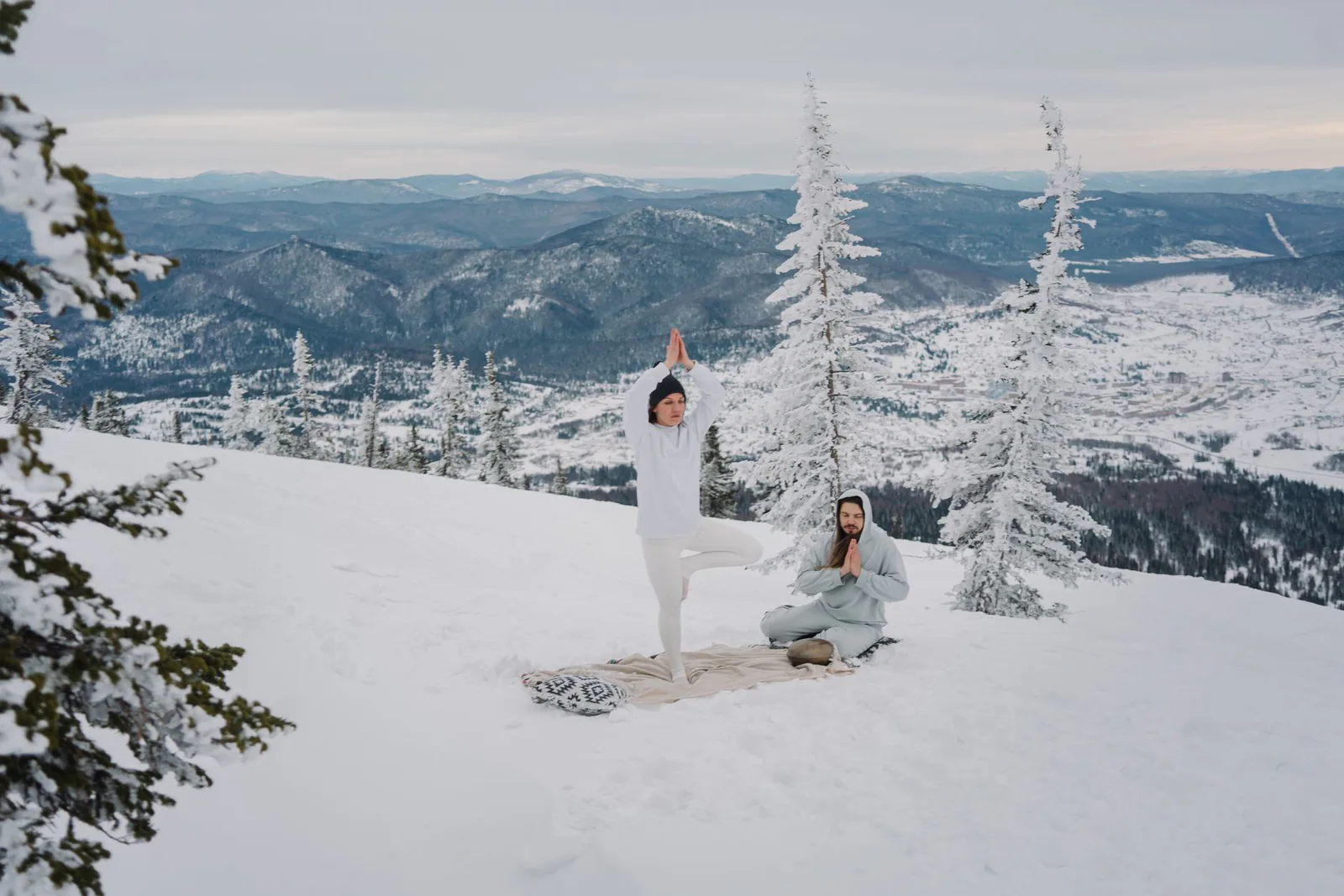
SEDONA, AZ (SATIRE) — For the low, low price of $12,000 — not including airfare, taxes, or the mandatory $400 "energy alignment surcharge" — you too can spend seven days sitting cross-legged on a hand-woven cushion in the Arizona desert, eating food described as "nourishing" because it is mostly air, and discovering that the enlightenment you were promised is, in fact, a leather-bound journal with your name embossed on the cover in gold.
The yoga retreat industry is booming. It is booming in the way that only an industry selling the absence of effort can boom — by charging a premium for the privilege of doing nothing in a scenic location. There are now an estimated 4,000 luxury retreats worldwide, each promising to help you "find yourself," "reconnect with your inner truth," or "release what no longer serves you," which is retreat-speak for "stop checking your email." The average cost has risen 60% in the last three years, which is remarkable for a product whose central activity is lying on the floor.
"We don't sell yoga," said Sage Morningstar, the fictional founder of Om Away From Om Retreats, which charges $14,500 for a week-long "soul immersion" in Sedona. "We sell the absence of your phone. The yoga is just the container. The silence is the product. The journal is the receipt."
The Itinerary of Transformation
A typical day at a luxury yoga retreat begins at 5:30 AM, when a gong sounds and participants are gently but firmly encouraged to rise for "sunrise meditation." This involves sitting in the dark for 45 minutes thinking about how much you paid to be awake at 5:30 AM. This is followed by "intentional movement," which is yoga, but described in a way that makes it sound like you're accomplishing something more spiritual than stretching.
Breakfast is "mindful," which means small. Lunch is "plant-forward," which means also small. Dinner is "a celebration of earth's bounty," which means slightly less small but still not enough to compensate for the fact that you hiked two miles that afternoon in 104-degree heat. Between meals, there are "workshops" — journaling workshops, breathwork workshops, sound bath workshops, and the ever-popular "vulnerability circle," in which twelve strangers sit in a room and take turns crying about their fathers while a person named Crystal holds space.
"The vulnerability circle changed my life," said one fictional attendee, a hedge fund manager from Greenwich who asked to remain anonymous because his colleagues would not understand. "I cried for the first time since 1994. I also paid $12,000 to cry in a room with a person named Crystal. My therapist charges $300 an hour and I've never cried once. So in terms of cost-per-tear, the retreat was actually a better value."
The Silence Economy
The economics of the yoga retreat are, at their core, the economics of selling people back something they already own. Silence is free. Stretching is free. Sitting on the floor is free. Breathing — even "intentional" breathing — is free. The retreat industry has figured out what every luxury brand has always known: if you put it in a beautiful setting, add a person with excellent posture to lead it, and charge enough that the price itself becomes a status signal, people will pay for the privilege of accessing their own basic bodily functions.
The markups are staggering. A yoga class at a studio in any major city costs $25. The same class, taught on a wooden platform overlooking a canyon, costs $1,700 per day. The difference — $1,675 — is what the industry calls "the setting premium" and what economists call "the gullibility surplus."
"You're not paying for the yoga," explained Dr. Linda Fictitious, a fictional wellness economist. "You're paying for the view, the organic linen sheets, the artisanal soap that smells like a forest, and the deeply held belief that spending $12,000 to be silent in Arizona makes you a more evolved person than someone who took a free meditation app and sat in their living room. That belief is the actual product. Everything else is staging."
The Journal Is the Product
Every luxury retreat includes a "transformation gift" — a journal, always. Sometimes it is leather-bound. Sometimes it is handmade by artisans in Bali. Sometimes it is described as "sacred." It is always, without exception, a notebook. And it is always presented at the closing ceremony as though it contains the answers to all of life's questions, when in fact it contains blank pages and, occasionally, a few prompts like "What are you releasing?" and "What is your soul hungry for?"
Attendees receive the journal with the reverence of someone being handed a sacred text. They write in it during the retreat. They carry it home. They place it on a shelf. They never open it again. Industry surveys — which are fictional — suggest that 94% of retreat journals are used exactly once, which is the same usage rate as the exercise equipment people buy in January.
"The journal is genius," said one fictional marketing consultant who specializes in wellness branding. "It's a $6 notebook that makes the entire $12,000 experience feel tangible. You can't take home the canyon. You can't take home the gong. But you can take home the journal, and every time you see it, you remember that you once paid five figures to sit in silence and eat seed crackers. That's brand loyalty."
The Real Treasure Was the Stretching We Did Along the Way
The retreat industry's central promise — that you will return "transformed" — is, like most promises made by industries that sell self-improvement, technically true in the narrowest possible sense. You will return different. You will return thinner, because the food was small. You will return poorer, because the retreat was expensive. You will return more flexible, because you did yoga twice a day for a week. You will return with a journal. Whether any of this constitutes "transformation" or simply "a vacation with better marketing" is a question the industry prefers you not ask.
And yet the retreats sell out. The waitlists grow. The testimonials glow. "It changed my life," says every testimonial, in slightly different words, as though they were all written by the same person — which, given that they all received the same journal, is perhaps not as unlikely as it sounds.
For those seeking a deeper exploration of what rest and retreat can mean — beyond the $12,000 price tag and the complimentary journal — there are voices offering a more grounded perspective. As one thoughtful writer explores in a piece about yoga retreat practices and the genuine journey back to oneself, rest doesn't require a canyon, a gong, or a leather-bound notebook. Sometimes it just requires sitting still and being honest about what you actually need — which, as it turns out, is free.
But free is a hard sell in an industry built on the principle that enlightenment costs extra. And so the retreats will continue, the journals will be handed out, the gongs will sound at 5:30 AM, and people will continue to pay $12,000 for the privilege of discovering that they already had everything they needed — except, apparently, the silence to notice it, which they could have had at home for $0 but chose to purchase in Arizona at a 12,000% markup.
"At the end of the day," said Sage Morningstar, adjusting his linen kaftan, "we're not selling enlightenment. We're selling the conditions under which enlightenment might, theoretically, occur. The journal is non-refundable."
At press time, Om Away From Om Retreats had announced a new "Advanced Soul Immersion" package for $22,000, which includes everything in the basic package plus a second journal and a slightly nicer cushion. The waitlist is already full.